
Start here — we see you
The short version: Your HIV status is yours. You decide who knows, when, and how much, and that includes the holiday table. You don't owe anyone an explanation. HIV doesn't pass through hugs, shared meals, shared dishes, or a shared bathroom,1 and a person who takes HIV treatment and keeps an undetectable viral load does not transmit HIV through sex.2 This guide covers how to protect your peace at the table, how to manage your medicine away from home, and, for parents and families, how to welcome someone you love home with open arms.
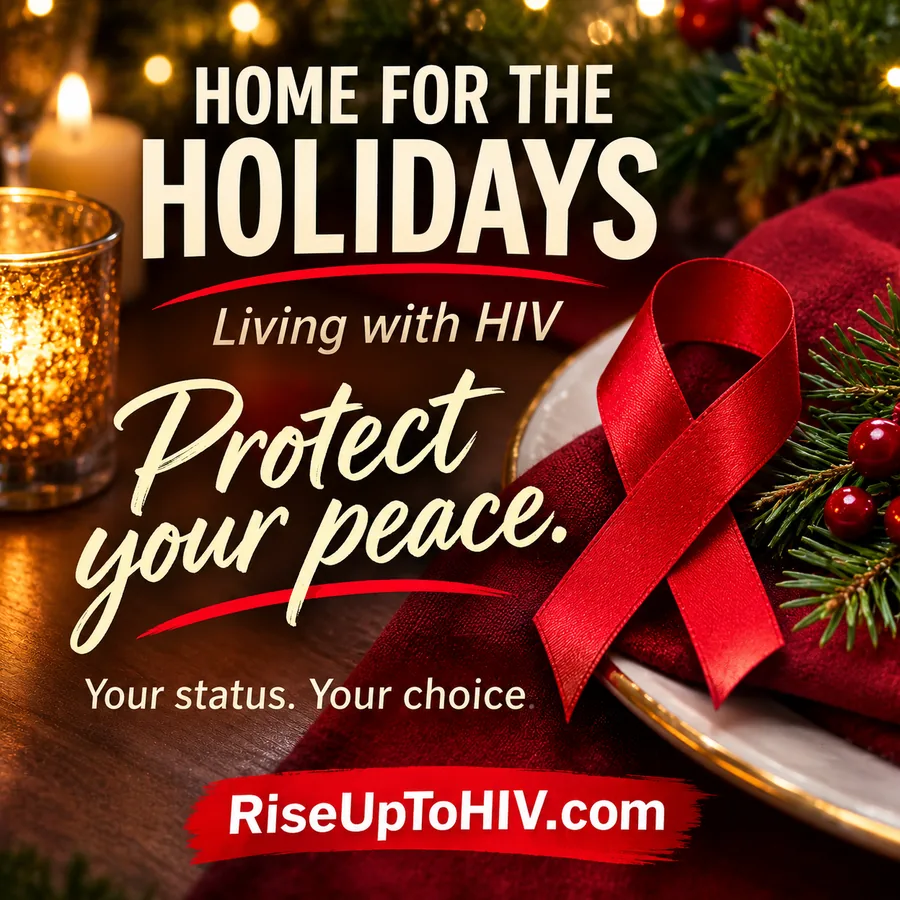
Not everyone goes home to kind, understanding, loving parents. If your family isn't safe, isn't ready, or isn't there, we see you. Your worth doesn't depend on anyone's reaction. Chosen family is real family, and there is support for you this season.
Your status, your choice
Many people learn their status young. In 2023, people ages 13 to 24 accounted for 18% of new HIV diagnoses in the United States.10 For some, this holiday is the first trip home since getting the news. That can bring up a lot.
- It's okay not to tell anyone this year. Disclosure is a decision, not an obligation. Waiting until you feel ready is not lying.
- It's okay to tell one person and not others. A sibling, a cousin, one parent. You can start small.
- It's okay to change your mind. Planning to tell and then deciding the moment isn't right is a good decision, not a failure.
- Your health is not a group topic. If someone who knows brings it up in front of others, you can end that conversation.
For a deeper look at whom to tell, when, and how, see Stigma & Disclosure.
At the table — when the questions start
“Are you seeing anyone?” “You look thin.” “What are all those pills?” “Why are you going to the doctor so much?” Holiday questions can feel like an interview. You don't have to answer any of them. Here are lines you can keep in your back pocket:
“I'm doing well, thanks. How's work going for you?”
“That's personal. I'd rather not get into it today.”
“Just my daily routine. Can you pass the potatoes?”
“I'm going to step outside for some air.” Then take a walk, call a friend, or text someone who gets it.
Plan ahead. Before you arrive, pick one person you can text if things get hard, decide how long you'll stay, and have your own way to leave if you can. Protecting your peace is a plan, not an overreaction.
If someone genuinely wants to learn, and you have the energy, three facts go a long way: HIV treatment works and people living with HIV can live long, healthy lives; you cannot get HIV from sharing a meal, a hug, or a bathroom;1 and Undetectable = Untransmittable.3 You can also just send them to our page for loved ones and let it do the explaining.
Your meds, away from home
Holiday travel breaks routines, and routines are how many people remember their medicine. A little planning keeps you on track and keeps your business your business.
- Pack enough for the whole trip, plus extra for delays. Keep your medicine in your carry-on, not your checked bag, so a lost suitcase doesn't mean a missed dose.4
- Flying? Keep the original labeled bottles handy. CDC advises carrying HIV medicines in their original packaging with labels showing the medicine, dose, and your name.5 For a short drive home, a pill organizer is more discreet.
- Refill before the holiday. Pharmacies may close or keep shorter hours. Check your refill date now.
- Crossing time zones? Ask your pharmacist or provider how to time your doses.4 For people who are stable on treatment with an undetectable viral load, taking one dose a few hours early or late because of a time-zone change will not usually cause problems.6
- Set a quiet phone alarm. Label it anything you like. “Vitamins” works.
- Missed a dose? Don't double up on your own. Call your pharmacist or care team for advice about your specific medicine.
If you decide to tell your family
Some people use the holidays to share their status because everyone is in one place. Others wait for a calmer time. If you're thinking about it:
- Pick your person and your moment. One-on-one, before or after the big meal, usually goes better than an announcement at the table.
- Lead with the facts that calm fear. “I'm on treatment, I'm doing well, and I'm going to be okay.”
- Bring backup. Have a friend on standby by text, and have our page for loved ones ready to share.
- Set the privacy rule out loud. “I'm telling you, not the whole family. Please don't share this.”
- Give them time. A shaky first reaction isn't always the final one. But you don't have to sit through cruelty while they figure it out.
For parents: when your child comes home living with HIV
If your child recently told you they are living with HIV, this may be your first holiday together since. You may be scared. That's normal. What matters most is that your child feels the same love at your table that they felt before.
Family support matters for health, not just feelings. In an NIH-funded study, young adults living with HIV who reported average or high social support were more likely to keep their virus suppressed than peers with low support.8 And research with LGBTQ young people found that family acceptance predicted greater self-esteem and better health, and protected against depression, substance use, and suicidal thoughts.9
“I'm so glad you're home. I love you, and nothing about that has changed.”
“I'm still learning about HIV. Tell me what would help you this week.”
“Who else knows? Not so I can tell them — so I know who I can talk to and who I can't.”
Treat them differently at the table: separate dishes, no hugs, worried looks. HIV is not passed by sharing meals, dishes, or a bathroom.1
Share their status with relatives, your faith community, or social media without their permission. It is their story to tell.
Ask “How did you get it?” If they want to share, they will.
Make the holiday about your grief. Your feelings are real; take them to a friend, counselor, or support group, not to your child at the table.
HIV.gov's guidance for supporting someone living with HIV is simple: acknowledge, ask, reassure, learn, and let them lead.7 For more, read A Message for Someone Whose Loved One Has HIV.
Tips for everyone around the table
Aunts, uncles, siblings, grandparents, cousins, friends: you may know, you may not, or you may only suspect. Either way, these make the table better for everyone.
Skip the body comments
“You lost weight” or “You look tired” can land hard for anyone managing their health. Say “It's so good to see you” instead.
Don't play twenty questions
Dating, doctor visits, and pill bottles are private. If someone changes the subject, let it change.
Hug like you always do
Normal affection is safe and it matters. Pulling back is noticed.1
Stop the jokes
An HIV joke or slur at the table tells everyone listening who is safe to talk to. Speak up, or at least don't laugh.
When home isn't safe — chosen family and support
Some people can't go home this year. Some go home and have to hide who they are. Some have been told not to come back. If that's you, we see you, and it is not your fault.
- Celebrate with chosen family. A Friendsgiving, a meal with friends, a potluck at a local LGBTQ+ center or HIV organization. Many host holiday gatherings. Use our care and resource finder to find organizations near you.
- Lean on peer support. Talking with other people living with HIV can make a hard season feel less lonely. See mental health resources.
- Keep your care going. If you need to leave home suddenly, your HIV care team and local Ryan White programs can help you stay on your medicine. See Ryan White.
If you need to talk to someone right now:
988 Suicide & Crisis Lifeline — call or text 988, any time, anywhere in the U.S.12
The Trevor Project (LGBTQ+ young people under 25) — call 1-866-488-7386 or text START to 678-678, 24/7.11
Crisis Text Line — text TALK to 741-741, 24/7.13
If you are in immediate danger, call 911.
After the holidays — decompress
However the holidays go, give yourself a soft landing. Rest. Eat something good. Talk to someone who gets it. If a conversation went badly, it doesn't erase who you are. If it went well, celebrate that. And if you found it hard to keep up with your medicine, call your care team and get back on track. Start where you are.
You made it through the season your way. That's protecting your peace.
Questions people ask
Do I have to tell my family I'm living with HIV?
No. Your status is your private health information. You decide if, when, and whom to tell. See Stigma & Disclosure.
Can my family get HIV from sharing a holiday meal?
No. HIV is not passed through shared food, drinks, dishes, utensils, hugs, or toilet seats.1
What if a relative tells others without my permission?
That is a breach of your trust, and you are allowed to be upset. You can set a clear boundary, limit what you share with that person, and lean on people who respect your privacy. A counselor or peer support group can help you plan next steps.
I'm a parent and I'm scared. Is that normal?
Yes. Fear usually comes from not knowing much about HIV today. Learn the basics, take your feelings to your own support, and keep showing your child they belong at your table.
How do I keep my meds private while staying with family?
Use a pill organizer for short trips, keep medicine in your own bag, and set a phone reminder with a neutral label. If you're flying, keep the labeled bottles in your carry-on.5
References & Sources
HIV.gov, CDC, NIH, peer-reviewed research, and crisis-support organizations (2010–2026).
- HIV.gov. How Is HIV Transmitted? Ways HIV is not transmitted, including shared food, drinks, utensils, and toilet seats. hiv.gov — transmission ↩↩↩↩↩
- CDC. HIV Treatment as Prevention. Maintained viral suppression and prevention of sexual transmission. cdc.gov — treatment as prevention ↩
- Prevention Access Campaign. U=U Consensus Statement. preventionaccess.org — consensus ↩
- NIH HIVinfo. Traveling Safely With HIV. hivinfo.nih.gov — travel ↩↩
- CDC Yellow Book. Travelers with HIV. cdc.gov — Yellow Book ↩↩
- aidsmap (NAM). HIV and travel. aidsmap.com — time zones ↩
- HIV.gov. Supporting Someone Living With HIV. hiv.gov — supporting someone ↩
- NICHD (NIH). Science Update: Social support promotes HIV suppression among young adults, NIH-funded study suggests. July 2023. nichd.nih.gov — PHACS study ↩
- Ryan C, Russell ST, Huebner D, Diaz R, Sanchez J. Family acceptance in adolescence and the health of LGBT young adults. J Child Adolesc Psychiatr Nurs. 2010;23(4):205–213. pubmed.ncbi.nlm.nih.gov ↩
- CDC. HIV Diagnoses, Deaths, and Prevalence: 2025 Update (2023 data; persons aged 13–24 accounted for 18% of diagnoses). stacks.cdc.gov — 2023 diagnoses ↩
- The Trevor Project. Get help 24/7. thetrevorproject.org — crisis support ↩
- 988 Suicide & Crisis Lifeline. 988lifeline.org ↩
- American Foundation for Suicide Prevention. LGBTQ+ crisis and support resources (Crisis Text Line). afsp.org — resources ↩